Estimate the cost of a charging session step by step using your kWh requirement, AC and DC unit prices and practical examples.
To calculate EV charging cost, focus on the amount of energy you expect to add during the session rather than the battery’s total capacity. Because billing is based on kWh, the core calculation is straightforward: multiply delivered energy by the applicable unit price.
2026 önizşarj AC and DC Unit Prices
The önizşarj tariff effective from 14 January 2026, including VAT, is 9.28 TL/kWh for AC charging and 12.48 TL/kWh for DC charging. Checking the current value on the pricing page before starting a session is always the most reliable approach.
| Energy delivered | AC charging | DC charging |
|---|---|---|
| 20 kWh | 185.60 TL | 249.60 TL |
| 40 kWh | 371.20 TL | 499.20 TL |
| 60 kWh | 556.80 TL | 748.80 TL |
How to Estimate the Required kWh
Approximate energy demand is found by multiplying usable battery capacity by the percentage range you want to refill. For example, taking a vehicle with 60 kWh usable capacity from 20% to 80% theoretically requires 36 kWh: 60 × 0.60 = 36 kWh.
During a real session, energy delivered to the vehicle may differ from the theoretical figure because of battery temperature, climate control, auxiliary loads and electrical losses. The final charge is based on the actual energy measured by the station.
When Is AC or DC the Better Choice?
- If the car will remain parked for several hours, AC charging is generally more economical and sufficient.
- On long journeys or when time is limited, DC charging provides higher power.
- The vehicle’s maximum accepted AC/DC power matters just as much as the station rating.
- Charging speed, particularly on DC, can taper as the battery fills; targeting around 80% during short stops often uses time more efficiently.
A Quick Check Before You Leave
Estimate the energy demand
Multiply the difference between current and target state of charge by usable battery capacity.
Choose the charging type
Select AC or DC according to parking time and the power your vehicle supports.
Verify the current tariff
Review the unit price in the app or on the pricing page before starting.
Review actual consumption
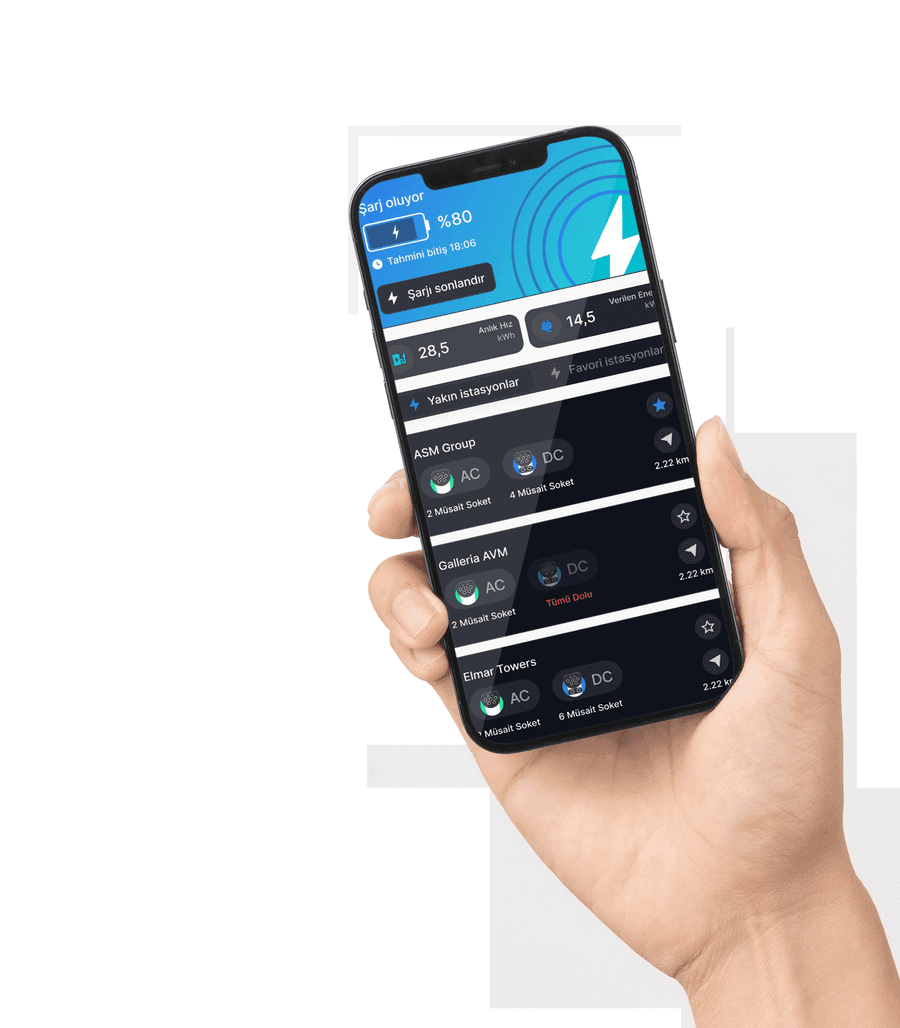
After the session, check delivered kWh and the total amount in the mobile app transaction details.
Sources
This article was prepared editorially using the official and institutional sources listed above. Verify tariff and regulatory information at the current source before acting.