
Reduce charging uncertainty on long trips by planning the route, station power, connector compatibility, arrival buffer and backup stops together.
A long-distance EV plan should not rely only on the kilometres between two charging points. Real consumption, weather, elevation, speed, station power and live availability all need to be considered together.
A Step-by-Step Road-Trip Charging Plan
Use realistic range
Consider your average consumption on previous trips and motorway speed rather than relying only on the dashboard estimate.
Space stops conservatively
Do not plan to use the final percentage of the battery; retain an arrival buffer for unexpected changes.
Confirm connector and power
Check that the connector is compatible and compare station power with the DC power your vehicle can accept.
Review availability before departure
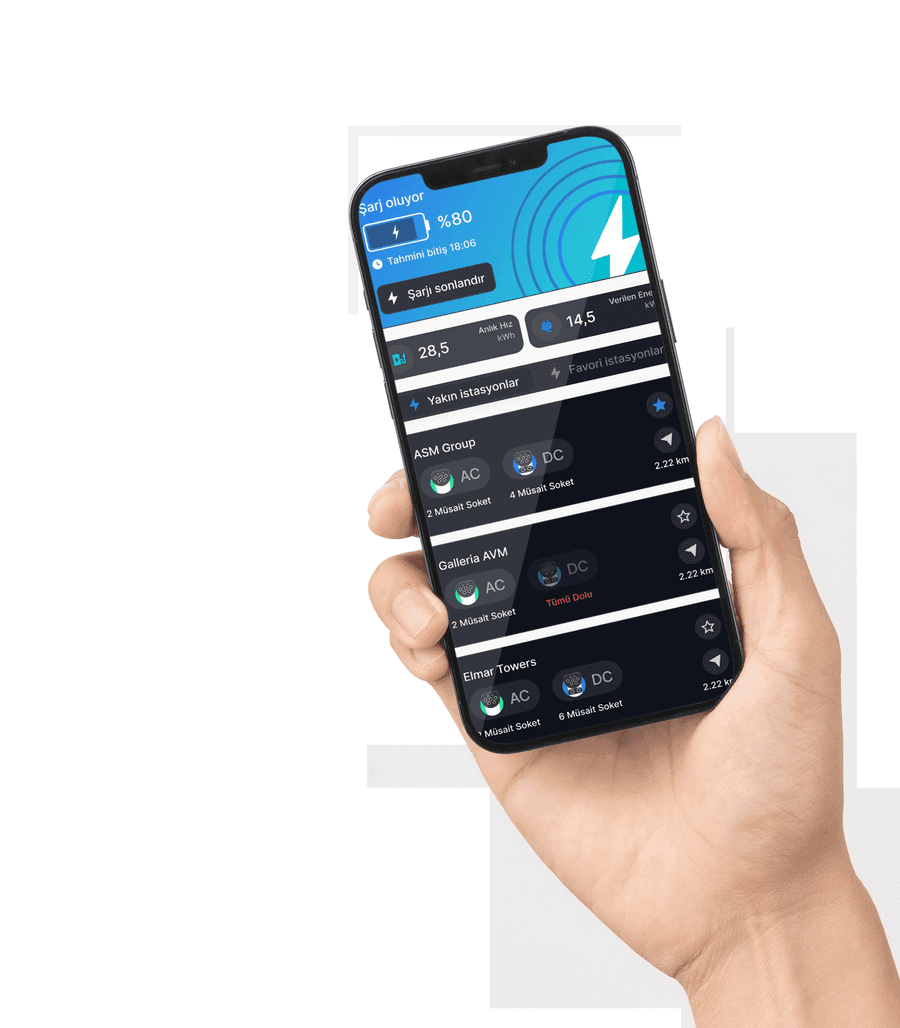
Use the live station map to check connector status, power and location.
Choose a backup stop
Save a nearby second option in case the primary station is occupied, unavailable or inaccessible.
Manage the stop around the charging curve
Power drops at high state of charge on many vehicles; leaving once you have enough energy can shorten total journey time.
Conditions That Change Consumption
- High motorway speeds and strong headwinds
- Cold or very hot weather and heavy climate-control use
- Long climbs, vehicle load and tyre pressure
- Battery temperature and fast-charging preconditioning
These effects vary by vehicle and trip. Leaving a buffer between stops is more dependable than tying the plan to one optimistic range figure.
What to Check in Station Information
| Check | Why it matters |
|---|---|
| Connector type | Determines physical and electrical compatibility. |
| Maximum power | Works with your vehicle’s acceptance rate to influence stop duration. |
| Live availability | Lets you adjust early when connectors are occupied or unavailable. |
| Access hours | Highlights restrictions caused by car parks, venues or barriers. |
| Backup station | Keeps the route moving when plans change unexpectedly. |
EMRA’s Şarj@TR platform is an official reference for comparing the location, connector, power, price and payment details of licensed public charging stations. The önizşarj map provides quick access to current information across our own network.
Sources
This article was prepared editorially using the official and institutional sources listed above. Verify tariff and regulatory information at the current source before acting.