A clear comparison of how AC and DC charging work, what determines power, connector considerations and the use cases each serves.
The easiest way to understand EV charging is to ask where electricity is converted before it reaches the battery. In AC charging, conversion happens in the vehicle’s onboard charger; in DC fast charging, the station supplies direct current to the battery system.
How Does AC Charging Work?
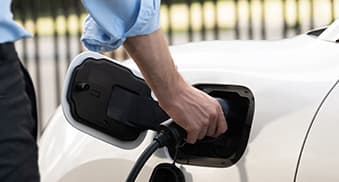
An AC station passes alternating current from the grid to the vehicle. The onboard charger converts it into the direct current used by the battery. AC speed is therefore limited by the vehicle’s onboard charger as well as the station rating.
- Well suited to homes, workplaces, hotels and long-stay car parks.
- Designed to add energy while the vehicle remains parked for hours.
- Connection power and installation cost are generally lower than DC fast charging.
How Does DC Fast Charging Work?
In a DC station, the power electronics sit inside the charger. Energy bypasses the vehicle’s onboard AC charger and is supplied to the battery at the rate permitted by its management system. This is designed for high-power, short-stop use.
- Suitable for intercity corridors and commercial use requiring quick turnaround.
- Power can taper as the battery fills or when temperature conditions are not ideal.
- The vehicle’s supported connector standard and maximum DC acceptance rate must be checked.
AC and DC Compared
| Feature | AC charging | DC fast charging |
|---|---|---|
| Conversion | In the vehicle’s onboard charger | In the charging station |
| Best use | Overnight and long parking | Short stops and road trips |
| Power constraints | Station and onboard charger | Station, vehicle and battery conditions |
| Planning priority | Parking time and site capacity | Route, speed and live availability |
Why Does Charging Time Vary by Vehicle?
Duration depends on usable battery capacity, starting and target state of charge, vehicle acceptance rate, battery temperature and the charging curve. “How many minutes will it take?” cannot be answered accurately from the charger rating alone.
The right choice is not simply the highest power. AC is often right when the car is parked overnight; a compatible DC fast charger is better for a short break during a journey.
Sources
- 1.NREL — Electric Vehicle Charging Station Installation Handbook
- 2.IEA — Global EV Outlook 2026: EV Charging
This article was prepared editorially using the official and institutional sources listed above. Verify tariff and regulatory information at the current source before acting.